
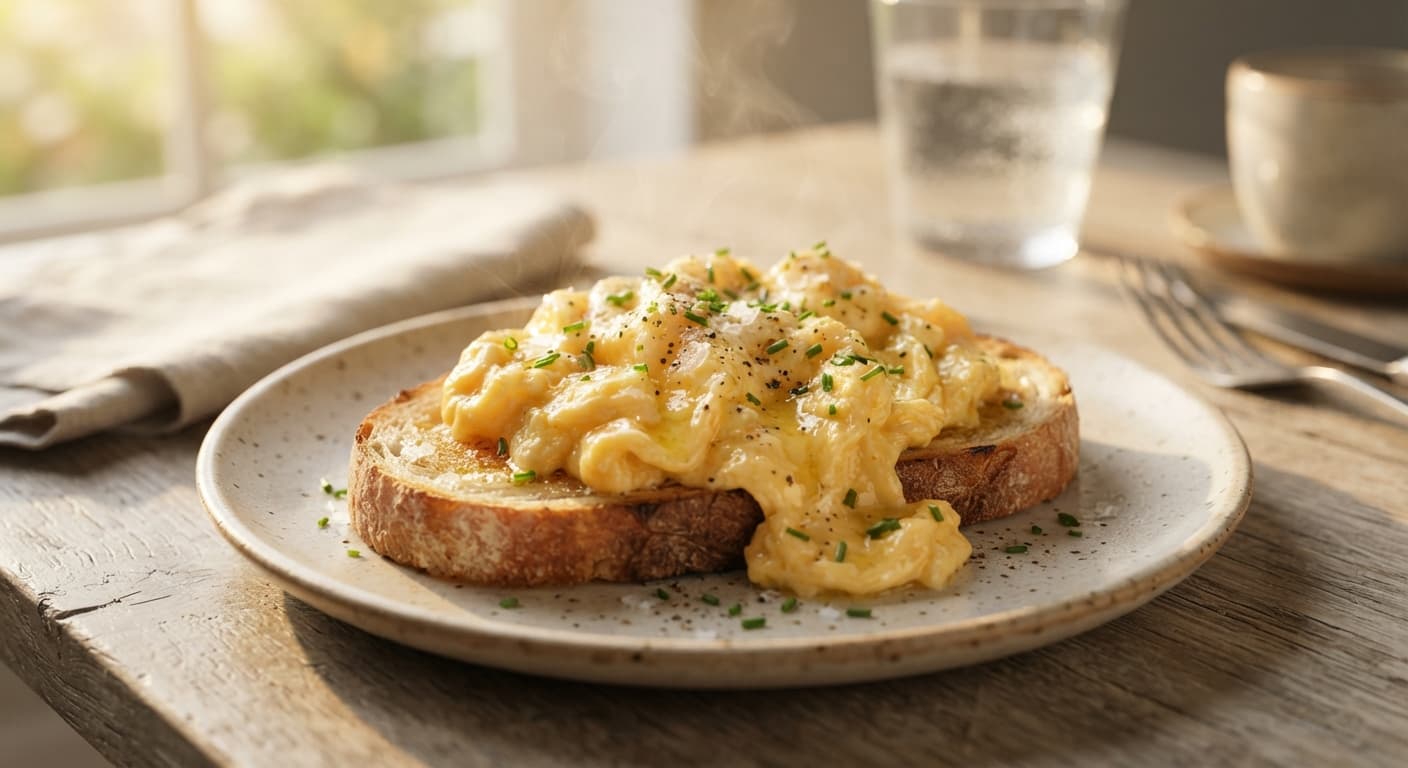
Soft Scrambled Eggs on Toast
Low heat, constant movement, and off the pan before you think.

Recipe Author
Riff Kitchen@riffkitchen
EuropeanQuick & EasyVegetarian
Soft Scrambled Eggs on Toast
Low heat, constant movement, and off the pan before you think.
By Riff KitchenOn Riff.kitchen, recipes start from what is already in your fridge. Add what you have, and it plans around whatever goes off first.
- 2 prep · 6 cook
- 8 min
- servings
- 2
- effort
- Easy
Gourmet's note
Almost all bad scrambled eggs are cooked too hot. Low and slow gives small, silky curds; high heat gives rubber and a puddle of water.
Method
6 steps · tap one to tick it off
Tips
Toast the bread before the eggs start. Soft eggs will not wait. Have the toast buttered and on the plate before the pan goes on.
Use a silicone spatula. It scrapes the whole base of the pan, so no layer sets into a rubbery skin while the rest stays soft.
Lift the pan away if it rushes. If curds form in the first minute, take the pan away for a few seconds. Slow heat is what keeps them creamy.
Swaps
No Bread (Sourdough)? Any sturdy bread, like rye or a thick white loaf, toasted well so it holds the eggs.
No Chives? Sliced scallion greens or a little chopped parsley.
No Butter? Olive oil, the same amount. Less rich, with a slightly grassy flavor.
Storage
Fridge: Best eaten the day it is made. Leftover eggs keep 3 to 4 days in a sealed container but firm up; the toast does not keep.
Freezer: Not worth freezing: soft scrambled eggs turn watery and rubbery when thawed.
Reheat: In the microwave at half power in short bursts, stirring, until steaming hot (75°C in the center).
Fridge and reheating follow Illinois Extension; freezer times are for quality and follow the University of Nebraska-Lincoln, as on what freezes and what does not.
Made it?
Tap a star to rate it.
Ask the chef
Swap something, change the servings, or ask why a step works
Riff Assistant
Ready to Remix
Community Reviews 0
No reviews yet. Be the first to try this!
Gourmet's note
Almost all bad scrambled eggs are cooked too hot. Low and slow gives small, silky curds; high heat gives rubber and a puddle of water.
Instructions
Follow the steps to perfection.
Tips
Toast the bread before the eggs start. Soft eggs will not wait. Have the toast buttered and on the plate before the pan goes on.
Use a silicone spatula. It scrapes the whole base of the pan, so no layer sets into a rubbery skin while the rest stays soft.
Lift the pan away if it rushes. If curds form in the first minute, take the pan away for a few seconds. Slow heat is what keeps them creamy.
Swaps
No Bread (Sourdough)? Any sturdy bread, like rye or a thick white loaf, toasted well so it holds the eggs.
No Chives? Sliced scallion greens or a little chopped parsley.
No Butter? Olive oil, the same amount. Less rich, with a slightly grassy flavor.
Storage
Fridge: Best eaten the day it is made. Leftover eggs keep 3 to 4 days in a sealed container but firm up; the toast does not keep.
Freezer: Not worth freezing: soft scrambled eggs turn watery and rubbery when thawed.
Reheat: In the microwave at half power in short bursts, stirring, until steaming hot (75°C in the center).
Fridge and reheating follow Illinois Extension; freezer times are for quality and follow the University of Nebraska-Lincoln, as on what freezes and what does not.
Made it?
Tap a star to rate it.
Community Reviews 0
No reviews yet. Be the first to try this!
Riff Assistant
Ready to Remix