
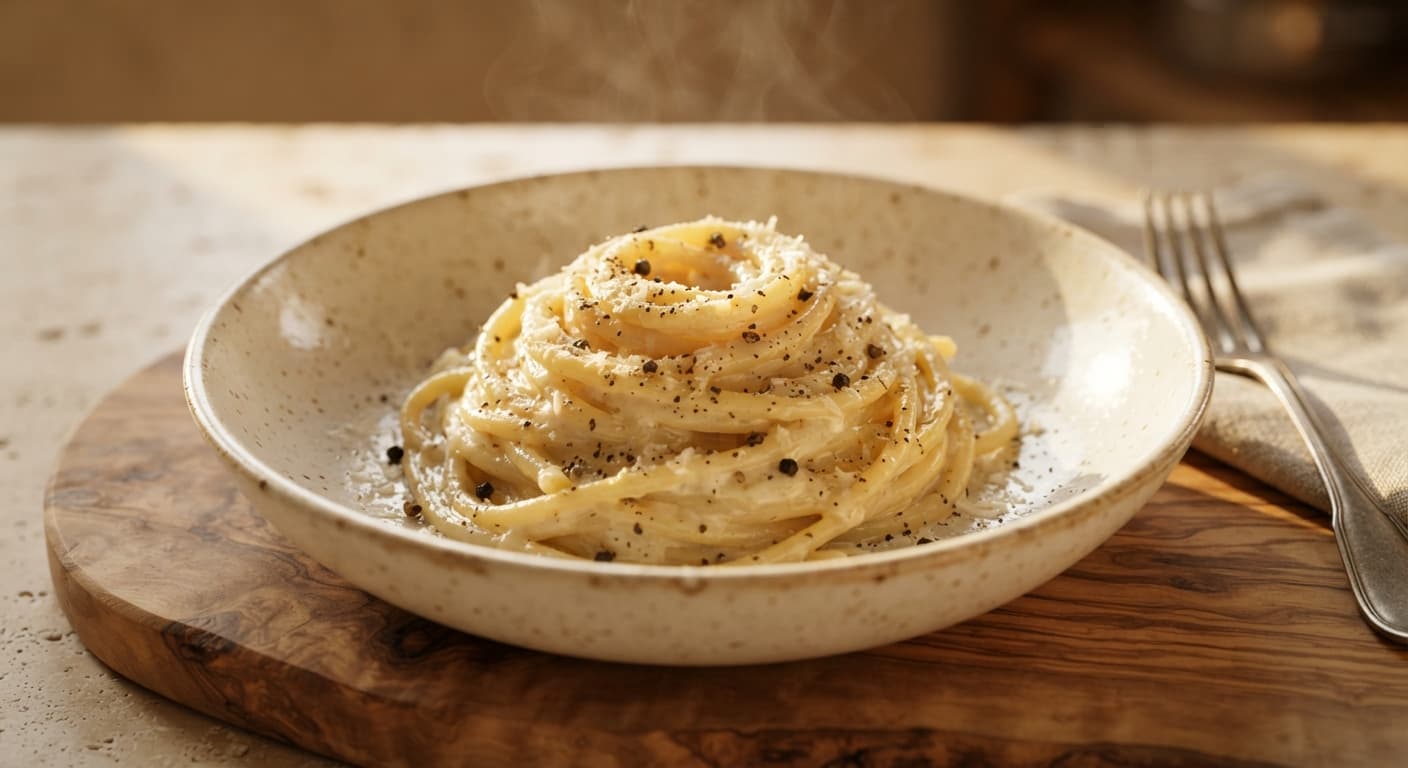
Cacio e Pepe
Three ingredients, one pan of starchy water, and the most famous pasta in Rome.

Recipe Author
Riff Kitchen@riffkitchen
Cacio e Pepe
Three ingredients, one pan of starchy water, and the most famous pasta in Rome.
By Riff KitchenOn Riff.kitchen, recipes start from what is already in your fridge. Add what you have, and it plans around whatever goes off first.
- 5 prep · 12 cook
- 17 min
- servings
- 2
- effort
- Medium
Classic's note
The whole dish lives or dies on pasta water. That cloudy starch is what turns cheese and pepper into a glossy sauce instead of a stringy clump.
Method
7 steps · tap one to tick it off
Tips
Grate the cheese as fine as possible. Use the smallest holes or a rasp. Fine cheese melts straight into the starchy water; coarse shreds clump into strings first.
Cook the pasta in less water. A wide pan with less water than usual makes starchier cooking water, which is what holds the cheese in a smooth sauce.
Crack the pepper coarsely. Coarse pieces toast without burning in those 40 seconds and give the sauce its bite. Fine pre-ground pepper scorches and turns bitter.
Swaps
No Cheese (Parmesan)? Pecorino Romano, the traditional Roman cheese. Saltier and sharper, so salt the water even less.
No Pasta (Spaghetti)? Tonnarelli, bucatini or linguine. Thick strands release more starch for the sauce.
Storage
Fridge: 3 to 4 days in a sealed container. The sauce sets and turns clumpy as it cools.
Freezer: Not worth freezing: the cheese sauce splits and turns grainy once thawed.
Reheat: In a skillet over low heat with a splash of water, tossing, until steaming hot (75°C in the center).
Fridge and reheating follow Illinois Extension; freezer times are for quality and follow the University of Nebraska-Lincoln, as on what freezes and what does not.
Made it?
Tap a star to rate it.
Ask the chef
Swap something, change the servings, or ask why a step works
Riff Assistant
Ready to Remix
Community Reviews 0
No reviews yet. Be the first to try this!
Classic's note
The whole dish lives or dies on pasta water. That cloudy starch is what turns cheese and pepper into a glossy sauce instead of a stringy clump.
Instructions
Follow the steps to perfection.
Tips
Grate the cheese as fine as possible. Use the smallest holes or a rasp. Fine cheese melts straight into the starchy water; coarse shreds clump into strings first.
Cook the pasta in less water. A wide pan with less water than usual makes starchier cooking water, which is what holds the cheese in a smooth sauce.
Crack the pepper coarsely. Coarse pieces toast without burning in those 40 seconds and give the sauce its bite. Fine pre-ground pepper scorches and turns bitter.
Swaps
No Cheese (Parmesan)? Pecorino Romano, the traditional Roman cheese. Saltier and sharper, so salt the water even less.
No Pasta (Spaghetti)? Tonnarelli, bucatini or linguine. Thick strands release more starch for the sauce.
Storage
Fridge: 3 to 4 days in a sealed container. The sauce sets and turns clumpy as it cools.
Freezer: Not worth freezing: the cheese sauce splits and turns grainy once thawed.
Reheat: In a skillet over low heat with a splash of water, tossing, until steaming hot (75°C in the center).
Fridge and reheating follow Illinois Extension; freezer times are for quality and follow the University of Nebraska-Lincoln, as on what freezes and what does not.
Made it?
Tap a star to rate it.
Community Reviews 0
No reviews yet. Be the first to try this!
Riff Assistant
Ready to Remix